Written by: Rachael P
Media advisories are different from press releases, even though they often include some of the same information. As the name implies, it is an advisory to give the media a heads up on something that is coming in the future. Typically, it is sent out prior to the press release (typically a press release announces something that has happened, or is happening that day). Media advisories tend to be less narrative than press releases and include more bullet points than paragraphs. Advisories are quick and easy to read.
Here are the basics for a standard media advisory.
- Start with your contact information: You should include your name, title and company, phone number and email address. You want to make sure there are no loopholes and it’s easy for anyone who reads your advisory to contact you.
- Standard tag line for most media documents. “For Immediate Release” (no quotation marks) should be at the top of your advisory, right below your contact information. Include the date right below this.
- Create a strong headline. Your headline is your first chance to draw readers in. It is also the first chance you have to lose them. Your headline should be interesting and captivating. Remember reporters get hundreds (if not more) of advisories, press releases, pitches, etc. every day. If your headline doesn’t grab them, you are likely to get lost on their desk.
- Introduction/Lead Paragraph. This is your second chance to be captivating and hook your audience. Your lead paragraph for a media advisory is the same as a standard lead paragraph in a press release. Typically, it is two or three sentences and contains basic information about what your topic is, where and when it is, and why it is important. You will want to be brief, but descriptive. You will have a chance to elaborate more about everything in the coming bullet points. (Don’t forget to include the city and state at the start of your introduction paragraph.)
- Meat of the Matter. This is where you can elaborate and tell more about your topic. At this point, you’ve already hooked your readers, so while you still want to be interesting, you can also get straight to the facts. Here’s what you should include:
- Who: who’s involved (company/companies, individual(s), organization(s), etc.)
- What: what’s happening (an event, an appearance, a trade show, an open house, the launch of a new campaign, etc.)
- When: on what date will this take place (be specific; for example: Friday, June 26, 2009 at 10 a.m. sharp)
- Where: where will this happen (again, be specific; for example: The XYZ Conference Center and Hotel, located on 12345 W 67th Street, Eight Floor, Ballroom 9)
- Why: this is probably the most important part – why is this event/topic happening. Your why section should highlight your cause and clearly illustrate to someone the reason behind it. If there is a good reason behind what you are doing, and it effects others, others will be able to see it (and hopefully the reporters you’ve targeted to send your release will see it’s newsworthy value too).
Finally, you can end with any additional remarks and extra details that weren’t previously covered. Remember your media advisory is to help generate buzz and interest prior to the big day (which would typically be when the actual press release is sent out). Keep it interesting and to the point.
Below is a quick sample of what you can expect your media advisory to look like.
Name
Person’s title, Company
Phone Number
Email Address
For Immediate Release
Today’s Date
Headline here. (p.s. a quick reminder: this is where you draw your readers in!)
City, State — Lead paragraph ….. 2-3 sentences.
(bullet points here).
Who:
What:
When:
Where:
Why:
Any final remarks? They go here.
###
There you have it … your media advisory is ready. Happy writing!
Written by: Rachael P
There was a pull at our office door earlier today. It was quickly followed by the peaking of a head through our window and me realizing their was a Domino’s delivery person at our front door. My mind was quickly perplexed. Typically I am the one who orders for our company luncheons, or I am at least aware of it, and I had no idea who or what this order was for. Naturally, my first question (of course, that is after saying hello) was who is this delivery for? The woman quickly responded with, “It’s a Free Delivery.” I wasn’t quite sure why she was bringing us a free delivery, but welcomed her in from the hot Texas heat. She informed me they were bring by a complimentary pasta bowl for us to share amongst our office staff. She even gave us a variety of flavor choices to choose from. A handful of coupons were also left on my desk. This was a nice gesture and much appreciate by our office.
This event inspired my blog post for today. It was a fairly clever marketing tactic – give something away for free and draw in new customers. This is often used by many companies, and to be honest, it had a nice effect on me. Not only did the smell of pizza flood our office and make our stomachs growl, but it left me with a nice feeling about our neighborhood Domino’s. Honestly, I have to admit the next time we order pizza, I’ll probably drop their name in the hat. I certainly can’t remember the last time I got something free from another chain pizza place, so it was refreshing to see this store step up to the plate.
How does this translate into marketing for your business? It shows if you give a dog a bone, s/he might just take it. Often giving away something inexpensive, yet tangible (and meaningful) to your clients (or potential ones) as a “free gift” can put an extra plus next to your name. Plus, personally delivering a freebie is another chance for you to put yourself (and therefore, your company) in front of your audience. It is a lot harder to refuse or not pay attention when someone is standing right in front of you. Sure Domino’s could have mailed our office some coupons for cheap pizza, and as the office manager, I would have noted that we received them and placed them into my big folder of special offers and coupons. However, I probably wouldn’t have paid it much attention and would have eventually forgotten they were even there. Instead I’ve smelled their food, I’ve been greeted by a friendly employee and have had a real interaction with them. The personal visit is much more memorable.
The moral of today’s story is to make yourself memorable, and stand out from the crowd. It can be a personalized visit to a customer (or potential one) or a freebie to the same group of people. You can even do BOTH. Whatever marketing route you take, make sure to make the most of it and leave a lasting impression.
Written by: Rachael P
Never assume your customers know what you want them to do. You have to make it fool-proof for them. You have to spell it out for them – in black and white. Think about it like this: first, customer reads your copy; then the customer does “X” task. X task is what you want them to do – perhaps it is for them to call your office or it could be signing up for your e-newsletter. Whatever it is, make it clear and simple. You don’t want your customers guessing. It can also be helpful to include some sort of time-frame onto special offers. This can help motivate your customers to act quickly. An example of this would be, “Today Only 25% off your purchase.”
The more specific your call to action … the more likely the customer will do what you want them to do.
Written by: Rachael P
Sometimes you just have to put yourself out there! It’s that simple. We can’t walk around in a cocoon. We have to make ourselves available for our colleagues, customers, family, friends and even strangers. You never know when you are going to meet someone – and when that someone is particularly important for you to meet. Sometimes you meet these people unintentionally and sometimes its on purpose.
I go to networking events all the time, and it can be tough when you don’t know a single soul in a room of forty or fifty people. It makes you feel overwhelmed. While I am not an expert, I’ve been to quite a few of these events and to truly reap the rewards, you have to put yourself out there. I’ve come up with a few tips that help me and make me feel more comfortable. Let’s face it … the more relaxed, comfortable and open you are, the more likely it is you will succeed. Here are three tips to take with you this Friday afternoon; these have helped me in the past.
- Find someone who looks like your mom. Seriously, I know it sounds silly, but try to find a person who looks like or gives off a maternal, friendly vibe to you. It is always easier to walk up to a person that I get the “mom” vibe from. It helps me start the conversation loosened up. If you can’t find someone who looks like your mom, think about your dad, sister or other family members you are close to. Finding someone, even if only by material looks, reminds you of someone you feel comfortable with and it will help you talk to them with more ease.
- Prepare ahead of time. Most networking events are pretty similar in nature. People get together, all have time to mingle and be social, then at some point you are going to talk about your business. Prepare your elevator speech (60 seconds max) about who you are and what you do. If you do this, when people ask, you will know exactly what to say and wouldn’t be stumbling over your words. The more prepared you are, the better you look. People want to know you can talk about your business on the spot, so you better be able to.
- Be positive. It doesn’t take much to put a smile on my face, and it shouldn’t for you either. Go into these events with a positive attitude, and you’ll transform your own experience. Putting a smile on your face makes you more approachable for others. Plus, people only have a short time to get to know you, and you want them to leave having gotten a glimpse of your delightful personality.
Try these out and see if they make a difference for you.
Written by: Jacqueline

Example contest web page
If you are looking for a way to encourage people to visit (and revisit) your web site, try an age-old marketing tool: a contest.
Think of a simple give-away item that relates to your business – small items could be: a book by an industry author, a how-to publication that you wrote, a white paper, t-shirts, other promotional items; larger items could be: a plane ticket, a vacation package, cash, etc.
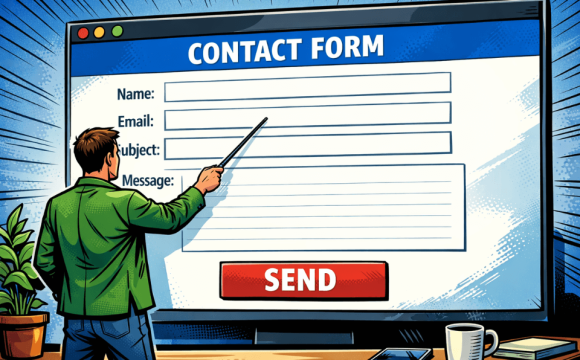
Now create an enticing and simple online form on your web site, and make sure it is easy to find. Post links and “ads” about the contest on your homepage and other popular pages. Make sure the rules and dates of the contest are nicely spelled out and do not scare your participants away. Include a newsletter subscribe option in the form. Make the confirmation page (thank you page) of your form valuable also – direct the user to particular information that you want them to see.
Take advantage of any marketing channels you have to announce the contest and create buzz about your business – submit the story to your Chamber newsletter, post it on networking web sites, mention it in your e-mail newsletter.
Once your contest is over, remember to follow through with the promise of selecting a winner and delivering the prize. Take the opportunity to follow up again with your customers and mailing list contacts by announcing the winner in an e-newsletter and other marketing media.
What this does for your business:
- Creates brand (and web site) awareness
- Offers opportunity to gather new contacts for your mailing list
- Invents an excuse to contact and follow up with people
- Generates news about your company
- Increases traffic to other areas of your web site